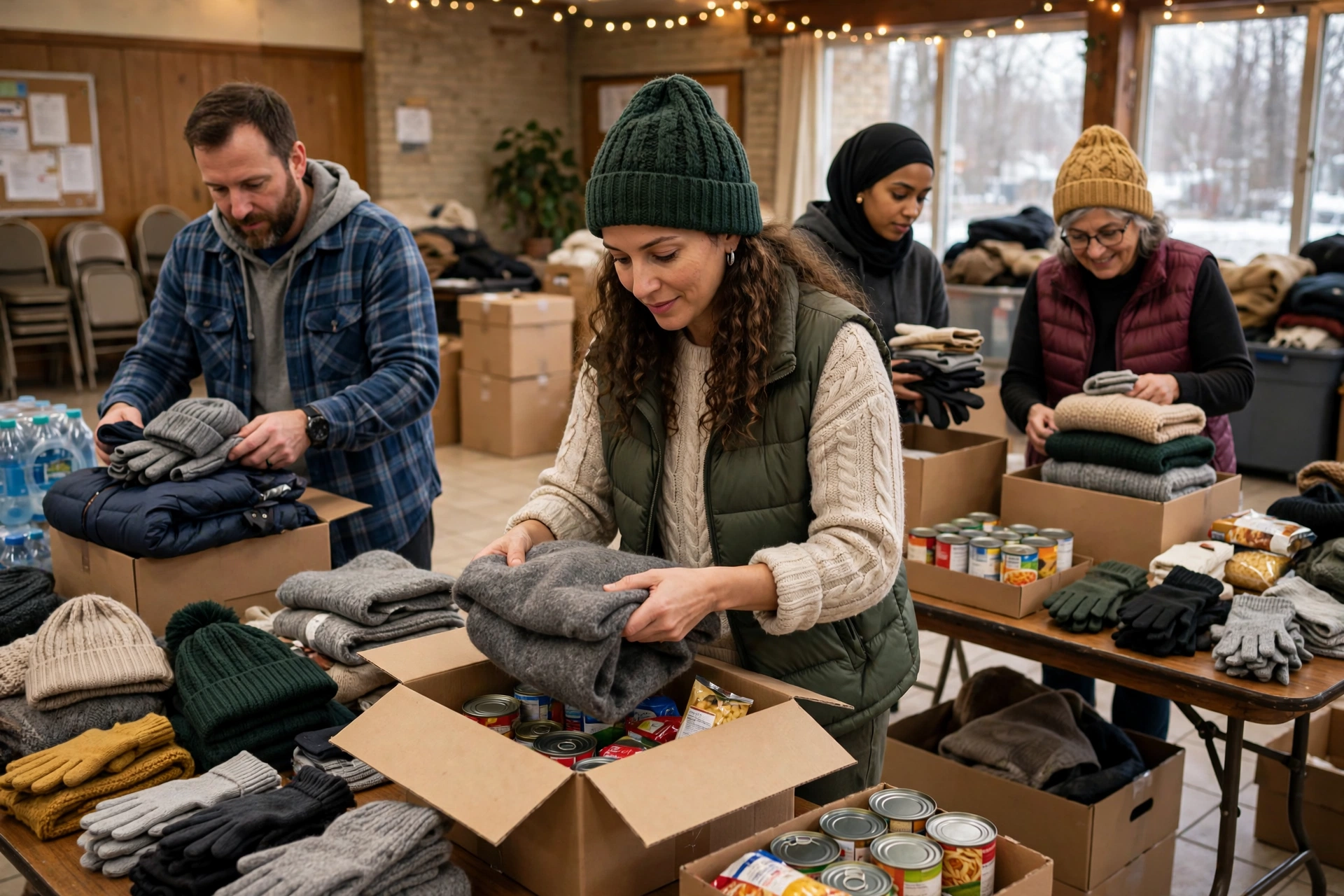
Long before the first frost arrives, the work of winter has already begun. In community halls, shuls, schools and small warehouses, volunteers are quietly preparing for the coldest months of the year, determined that no family in the community should face winter unprepared. Their effort is practical, organised and deeply personal: food parcels are packed, warm clothing is sorted, and lists of elderly residents who may need checking on are carefully updated.
Food Parcels: The First Line of Preparation
Food is where most winter drives begin. Staples that store well and cook simply — grains, pasta, tinned goods, oil and basic ingredients for warm meals — are collected weeks in advance, because demand always rises as heating bills climb and household budgets tighten. Organisers say the key lesson from previous winters is timing: a parcel delivered in the first cold week is worth far more than the same parcel delivered a month later, when a family has already had to choose between heating and eating.
Distribution is handled with discretion. In many communities, parcels are delivered to the door rather than collected from a public point, protecting the dignity of the families receiving them. Drivers are often the same volunteers who packed the boxes, and their visits double as an informal welfare check, a chance to ask whether anything else is needed before the weather turns.
Checking on the Elderly and Vulnerable
Winter is hardest on those who live alone. Volunteer networks therefore keep calling lists of elderly residents and people with health conditions, with regular check-ins scheduled through the cold months. A short phone call can surface problems early: a broken boiler, a missed prescription, icy steps that make leaving the house dangerous, or simple loneliness during the long dark evenings.
National preparedness guidance makes the same point at household level. The Ready.gov winter weather guidance advises checking on neighbours during severe weather, keeping emergency supplies at home and knowing how to stay warm safely if power or heating fails. Community volunteers put that advice into practice at scale, turning individual goodwill into a reliable system.
Read also on Hefker Velt: Thursday November 28 News Updates Lakewood and Friday November 29 News Updates Lakewood.
Warm Clothing Drives
Coats, blankets, gloves and children’s winter clothing form the second pillar of the effort. Clothing drives work best when they start early, while families are clearing wardrobes in the autumn, rather than in mid-winter when the need is already urgent. Donated items are sorted by size and condition, and children’s coats are consistently the most requested items, because children outgrow them every single year.
The American Red Cross winter storm advice underlines why this matters: dressing in warm layers, protecting extremities and having blankets ready are basic defences against cold-related illness, particularly for older people and young children.
How the Effort Is Organised
Behind the friendly surface sits serious organisation. Coordinators track stock, schedule drivers, manage referral lists from schools, rabbis and social workers, and raise the funds that fill the gaps donations leave. Small sums matter: money donated early buys in bulk, at better prices, before seasonal demand pushes costs up. Many drives now also coordinate with local businesses, which contribute storage space, vehicles or surplus stock.
How to Help
The organisers’ message to anyone who wants to contribute is simple. Give early rather than late, give practical items rather than novelties, and give time if you can: an hour of driving or packing is often worth more than a donation. Above all, look out for the people nearest to you. Winter preparation, done properly, is not really about parcels and coats. It is about a community deciding, in advance, that nobody will be left to face the cold alone.
2 thoughts on “Ahead of Winter: How Community Volunteers Are Preparing Families in Need”