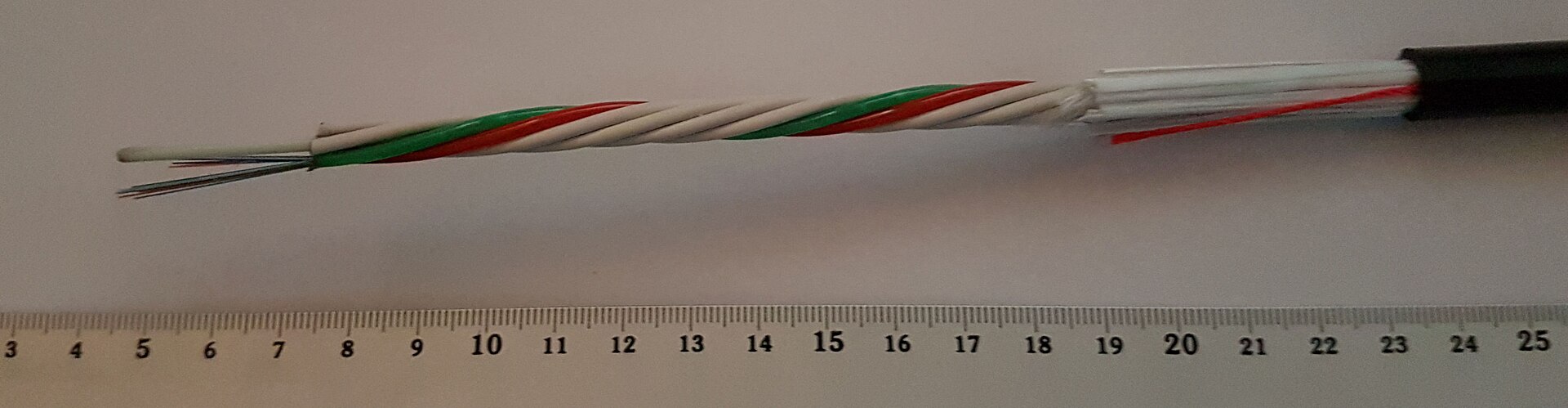
Quantum communication has lived for years in the laboratory: delicate experiments, carefully shielded from vibration and noise, that worked for an afternoon and then had to be rebuilt. That is beginning to change. Research teams and telecoms firms are now running quantum signals through ordinary fibre-optic cables in real cities, linking universities, data centres and government buildings. The distances are still modest and the technology is fragile, but the direction is significant — quantum networks are leaving the lab bench.
The prize is communication whose security rests on physics rather than mathematics. In quantum key distribution, information is encoded in particles of light; any attempt to intercept them disturbs them in a detectable way. Readers of hefkervelt.org may also have heard of the longer-term vision, a quantum internet that could connect future quantum computers and sensors. Today’s networks are a first, practical step towards that idea.
Why the real world is so hard for quantum signals
A laboratory controls temperature, vibration and interference. A city does none of that. Fibre under busy streets carries ordinary internet traffic alongside the faint quantum signals, which can be drowned out by noise. Quantum states also cannot be amplified like classical signals — copying them is forbidden by the physics that makes them secure — so distance is a fundamental obstacle that researchers attack with trusted relay nodes, satellites and, eventually, devices called quantum repeaters that are still in development.
Standards bodies such as NIST are involved on the other side of the problem as well: preparing conventional cryptography that can resist future quantum computers, since the data being protected today may need to stay secret for decades.
What the early networks are used for
The first customers are banks, governments and research institutions that need to move keys and sensitive data between a small number of fixed sites. Metropolitan testbeds let engineers learn unglamorous but essential lessons: how to maintain the equipment, how often it fails, what it costs and how it fits with existing networks. Our 2024 coverage of emerging technology often finds this pattern — the pilot phase looks dull compared with the vision, but it is where technologies either become infrastructure or quietly fade.
Journals such as Nature have published a steady stream of results extending distances, improving rates and demonstrating entanglement distribution over deployed fibre — each a small step, but steps in the real environment that ultimately matters.
Scepticism is part of the picture
Not every expert believes quantum key distribution is the best use of money. Improved classical cryptography, including the new post-quantum standards, may protect most users more cheaply, and early quantum systems have had vulnerabilities in their hardware even when the underlying physics is sound. The honest position is that quantum networks are a strategic technology being built before the need is urgent, on the argument that infrastructure cannot be improvised when it suddenly becomes necessary.
From experiment to infrastructure
That argument has persuaded governments to fund national programmes and cross-border links. Whether quantum networks become a general-purpose internet or remain a specialised layer for high-value communication is still unknown. What is clear is that the field has crossed a threshold: the questions are now about engineering, cost and maintenance in real cities, not only about whether the physics works. The lab bench has done its job; the network must now prove itself outdoors.
There is a workforce story inside the technology story, too. Quantum networking needs people fluent in both quantum physics and conventional telecoms engineering, and there are not many of them. Universities are creating joint programmes, and equipment firms are hiring physicists into roles that did not exist five years ago. That scarcity slows deployment as surely as any technical obstacle. It also means the early networks double as training grounds: the engineers who keep a city’s first quantum link running through a winter of construction work and temperature swings are acquiring experience that no simulation can provide, and that the next, larger networks will depend upon.