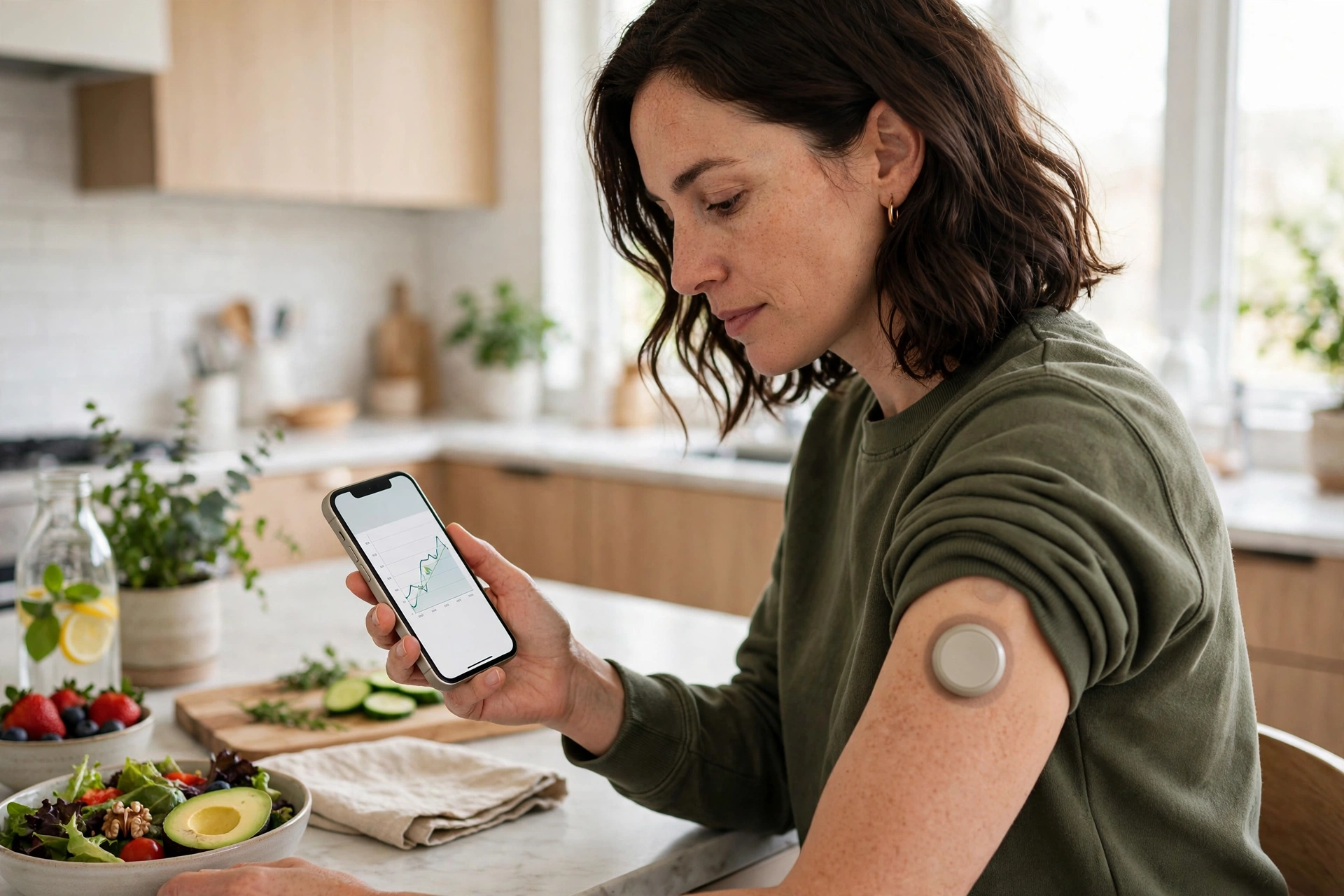
For millions of adults living with type 2 diabetes who do not use insulin, checking blood sugar has traditionally meant finger-prick tests a few times a day — snapshots that miss everything happening in between. A major new clinical trial, described as the largest of its kind and published in the New England Journal of Medicine, suggests that continuous glucose monitors (CGMs) can change that picture dramatically, helping patients spend roughly five more hours every day in their target blood sugar range.
What the Trial Found
Continuous glucose monitors are small wearable sensors, usually worn on the upper arm or abdomen, that measure glucose levels every few minutes and send the readings to a smartphone or receiver. Until now, the strongest evidence for their benefit has come from people who use insulin, and insurers have often restricted coverage on that basis. This new research focused specifically on adults with type 2 diabetes who manage their condition without insulin — a far larger group — and found that access to continuous readings translated into measurably better day-to-day control.
Five extra hours a day in range is not a trivial gain. Time in range is increasingly treated by specialists as one of the most meaningful measures of diabetes control, because long periods of high blood sugar are linked to damage to the eyes, kidneys, nerves and heart, while sharp drops bring their own immediate risks. A device that quietly shows the effect of a meal, a walk or a stressful morning gives patients feedback that a single morning reading simply cannot.
Why Continuous Feedback Changes Behaviour
Doctors who work with CGM users often describe the same pattern: the technology turns abstract advice into visible cause and effect. A patient who sees a clear spike after a particular breakfast is far more likely to adjust that meal than one who is simply told to eat fewer carbohydrates. Likewise, watching glucose fall during an evening walk reinforces a habit that generic advice rarely sustains.
That behavioural loop connects closely with what researchers are learning about the wider body. Our recent look at the gut-brain connection and how the microbiome shapes mood explored how diet, metabolism and wellbeing influence one another in ways patients can feel long before a lab result changes. Continuous monitoring adds a practical, real-time layer to that understanding.
What It Could Mean for Everyday Care
If the findings hold up in routine practice, the implications are significant. Wider CGM use could shift type 2 diabetes care away from infrequent check-ups based on a single HbA1c result every few months, towards ongoing, data-informed adjustments made by patients and clinicians together. The American Diabetes Association already recognises CGM as a valuable tool in diabetes management, and evidence like this strengthens the case for expanding access beyond insulin users.
There are still honest questions to answer. Sensors cost money, and health systems will want proof that better time in range today prevents expensive complications years from now. Some patients find wearing a sensor intrusive, and the stream of data can feel overwhelming without proper support from a care team. Training matters: a monitor handed over without explanation is far less useful than one introduced with clear guidance on how to respond to trends rather than panic over single readings.
Practical Takeaways for Patients
For readers managing type 2 diabetes without insulin, the sensible first step is a conversation with your doctor about whether a continuous monitor fits your treatment plan, especially if your blood sugar varies a lot or your HbA1c is above target. If you do start using one, focus on patterns over days rather than individual numbers, review the data at appointments, and pair the readings with small, sustainable changes to meals, activity and sleep.
Household budgets are a real consideration too, since sensors are replaced every 10 to 14 days. Our guide to stretching the household budget as winter costs rise covers practical ways families are freeing up money for essentials — and for many people, better diabetes control is exactly that: an essential worth planning for.
The headline result is simple. For adults with type 2 diabetes who do not use insulin, continuous glucose monitoring is no longer just a promising gadget. On the best evidence yet available, it is a practical tool that can deliver about five extra hours a day of healthier blood sugar — time that adds up, quietly, to better long-term health.
1 thought on “Continuous Glucose Monitors Help Type 2 Diabetes Patients Stay in Range Longer”