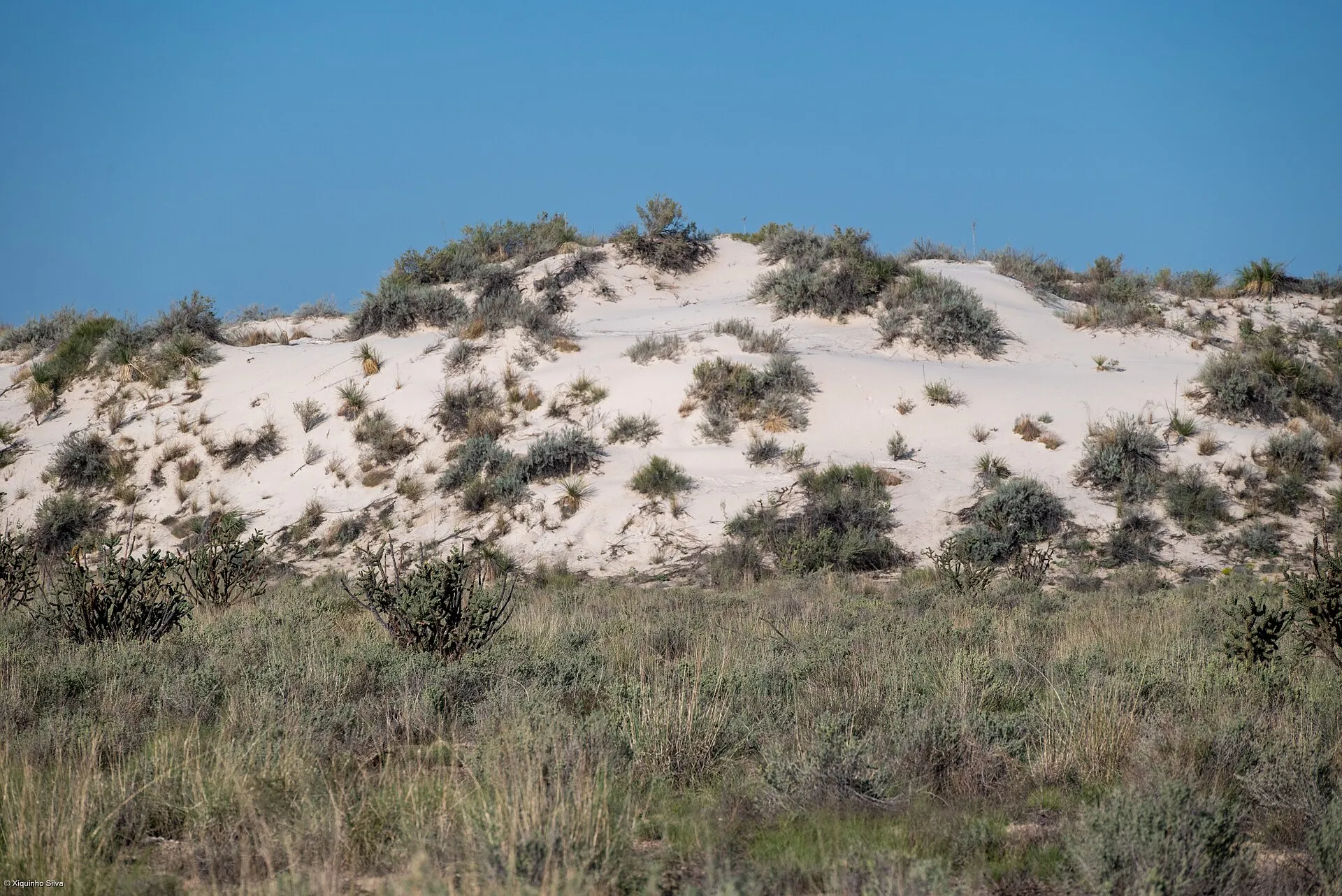
Twenty thousand years ago, the place we now call White Sands was the shoreline of a large Ice Age lake. New research published in Science Advances reconstructs that shoreline world and finds that its human inhabitants lived through repeated, abrupt environmental change during the coldest phase of the last ice age.
The study (DOI 10.1126/sciadv.aeh0707) draws on the sediment record of the Tularosa Basin in New Mexico, where ancient Lake Otero once spread across the basin floor. The layers of sediment preserve evidence of the lake’s changing level and chemistry, and of the plant life that surrounded it.
Change on a Human Timescale
What stands out in the record is the pace. Conditions did not simply drift slowly from cold to warm over millennia; the basin saw fluctuations significant enough to move shorelines and reorganise habitats within timeframes that mattered to the people living there. Fresh water, game and plant foods would have shifted location as the lake advanced or shrank.
The celebrated White Sands footprints, dated in earlier research to roughly 21,000 to 23,000 years ago, were left by people walking exactly this changeable shore. Children, adults and, in one famous sequence, a person apparently tracking a giant ground sloth all crossed the mudflats that fringed the lake.
Adaptation in Practice
For archaeologists, the significance lies in what continued occupation implies. Staying in a landscape that keeps changing requires accumulated knowledge: alternative water sources, seasonal awareness, flexible hunting and gathering strategies, and probably connections with neighbouring groups. The paper is available in full at Science Advances.
Our archive takes the same evidence-first approach to very different topics, as in our guide noting that Measles Cases Grow Again: A Calm Guide to Symptoms and Protection.
A Wider Significance
The Neighbours: Mammoths and Sloths
The human story at White Sands unfolded alongside Ice Age megafauna. Columbian mammoths crossed the same mudflats, and giant ground sloths left trackways that in one famous case appear to show a sloth rearing up as people approached. Those animals, too, were tracking the shifting lake, gathering where water and forage remained reliable as conditions changed.
That shared dependence on the lake makes the basin a single ecological story rather than separate human and animal ones. When the climate swung, every large creature in the Tularosa Basin felt it, and the sediment record preserves all of their responses in the same layered archive.
The site also illustrates how preservation can surprise even specialists. Gypsum is soft and water-soluble, hardly an obvious fossil medium, yet the specific chemistry of the dried lake bed hardened footprint layers just enough to survive. Researchers describe the resulting record as a snapshot album of behaviour, something bone beds and tool scatters rarely provide, and it is that behavioural richness that the new climate study now sets into its proper environmental scene.
Scholars also note the value of the site’s continuous record for testing ideas about cooperation. Surviving abrupt change is rarely a solo achievement; it implies sharing information about water and food across family groups and probably across generations. The sediments cannot show conversations, but the persistence they document is difficult to explain without them, which makes White Sands quiet evidence for the social foundations of human success.
White Sands has become a benchmark site in the debate over when people first reached the Americas. This latest study does not re-argue the dates; it does something arguably more valuable, by showing the conditions under which early settlement happened. The first chapter of American prehistory, it turns out, was written by people who were already experts at living with environmental change.