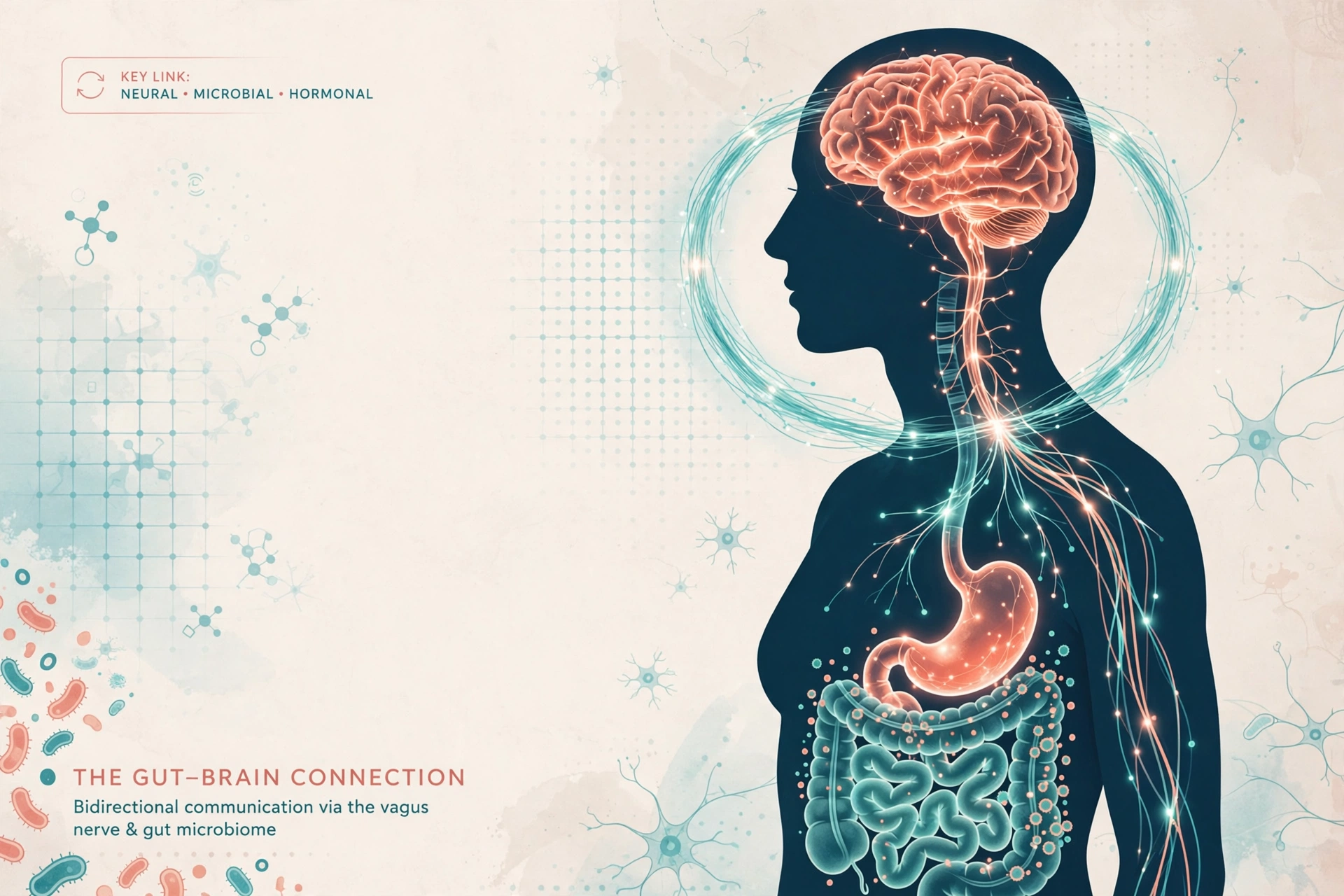
Feeling anxious, low or strangely on edge for no clear reason? The explanation may lie further down than your brain. Over the past decade, research into the gut-brain connection has moved from the fringes of medicine into its mainstream, and in 2026 it is reshaping how scientists think about mood, stress and mental wellbeing. The trillions of microbes living in your digestive system — your microbiome — are in constant conversation with your brain, and what they say appears to matter.
A two-way conversation
The gut and the brain are linked by the vagus nerve, one of the longest nerves in the body, as well as by hormones and immune signals carried in the bloodstream. This network, known as the gut-brain axis, works in both directions. Stress can upset digestion — most of us have felt “butterflies” before a big moment — but signals also travel upward. Gut microbes produce many of the same neurotransmitters that regulate mood in the brain. Around 90 per cent of the body’s serotonin, a chemical strongly linked to feelings of wellbeing, is produced in the gut.
Harvard Health Publishing has described this relationship in detail, noting that the gut is sometimes called the “second brain” because of the dense web of neurons lining it. You can read more in Harvard’s overview of the gut-brain connection. Johns Hopkins Medicine makes a similar point in its guide to the brain-gut connection, explaining how digestive problems and emotional distress so often arrive together.
What the evidence shows
Studies comparing the microbiomes of people with depression and anxiety against healthy controls have repeatedly found differences in the diversity and balance of gut bacteria. Other research has shown that people who eat more fermented foods and fibre tend to report lower levels of perceived stress. In one widely cited line of experiments, transferring gut microbes from anxious animals into calm ones changed the recipients’ behaviour — a striking demonstration that the influence is not only in our heads, quite literally.
Scientists are careful to stress that the microbiome is one piece of a much larger puzzle. Genetics, sleep, exercise, life circumstances and brain chemistry all play major roles in mental health. No yoghurt drink will cure clinical depression. But the evidence increasingly suggests that the gut is a lever worth pulling — one that, unlike many others, we influence three times a day through what we eat.
Feeding the conversation
The practical advice emerging from the research is refreshingly unglamorous. Diversity is the first goal: studies of large populations suggest that eating around 30 different plant foods a week — vegetables, fruits, legumes, grains, nuts, seeds, herbs and spices — is associated with a richer, more resilient microbiome. Fibre matters because gut bacteria ferment it into short-chain fatty acids that nourish the gut lining and calm inflammation.
Fermented foods are the second pillar. Live yoghurt, kefir, kimchi, sauerkraut and kombucha introduce beneficial bacteria directly, and trials have linked regular consumption to reduced markers of inflammation and stress. The third pillar is restraint: ultra-processed foods, heavy alcohol use and unnecessary antibiotics all tend to narrow microbial diversity. Sleep and stress management complete the picture, because poor sleep disrupts the gut just as a disrupted gut can disturb sleep — the two-way street again.
A calmer home helps too
Of course, mood is not managed in the kitchen alone. Financial pressure and a chaotic home environment are powerful sources of stress in their own right, which is why our recent guide to planning a household budget for winter costs pairs naturally with this one: small reductions in everyday anxiety, whether from money or from better digestion, tend to compound.
The bottom line
The gut-brain connection does not offer miracle cures, and anyone struggling with persistent anxiety or low mood should seek professional help. But it does offer something valuable: agency. Every meal is a chance to support the microbial community that helps regulate how you feel. In 2026, looking after your mind increasingly means looking after your gut as well — and that is a prescription most of us can happily fill.
1 thought on “The Gut-Brain Connection: How Your Microbiome Shapes Your Mood”